The AI industry has a dirty secret: most AI projects never make it out of the pilot phase.
At HyperSense Software, we’re responding by focusing entirely on production-ready agentic AI solutions. These are autonomous systems that actually work in the real world, not just in demos.
Here’s why this matters.
65% of companies are experimenting with AI agents. But only 11% have managed to deploy them in production. That’s a staggering gap, one we’ve watched grow wider as the hype around artificial intelligence has intensified.
We’ve spent years building software solutions for businesses across industries. We’ve seen firsthand how companies struggle to move from impressive demos to working systems. We’ve watched promising AI initiatives stall in “pilot purgatory,” burning budgets and patience while delivering little tangible value.
This isn’t about chasing the latest trend. It’s about responding to what we observe every day: businesses that need a trusted partner to help them bridge the gap between AI promise and AI reality.
In this article, we’ll share why we’re making this strategic shift, what it means for our clients and partners, and how we approach building AI that works.
The production gap problem
The agentic AI market is booming. Analysts project it will grow from $7.55 billion in 2025 to nearly $200 billion by 2034. Every major tech company is announcing AI initiatives. The promise is extraordinary: autonomous agents that can handle complex tasks, make decisions, and work alongside humans to transform how businesses operate.
But here’s what the headlines don’t tell you.
The overwhelming majority of AI projects fail to deliver on that promise. Industry research consistently shows that 80-95% of AI initiatives never reach production. Companies invest significant resources into pilots, proofs of concept, and experiments, only to watch them stall before generating real business value.
We call this “pilot purgatory,” and it’s become an industry epidemic.
Why projects get stuck
The reasons are painfully consistent:
- Data fragmentation: Information scattered across siloed systems in incompatible formats
- Integration complexity: Teams spend 80% of their time building connectors instead of training agents
- Legacy infrastructure: 86% of organizations need system upgrades to support modern AI
- Hidden costs: Budget surprises that go far beyond model API fees
- Expertise gaps: Specialized skills required that most teams don’t have
And then there’s “agent washing,” vendors rebranding basic automation as advanced AI, setting unrealistic expectations that inevitably disappoint.
The result? Organizations become skeptical. They’ve been burned before. And the gap between AI potential and AI reality keeps growing.
What agentic AI actually means
Before going further, let’s clarify what we’re talking about. “AI” has become one of the most overused and misunderstood terms in business.
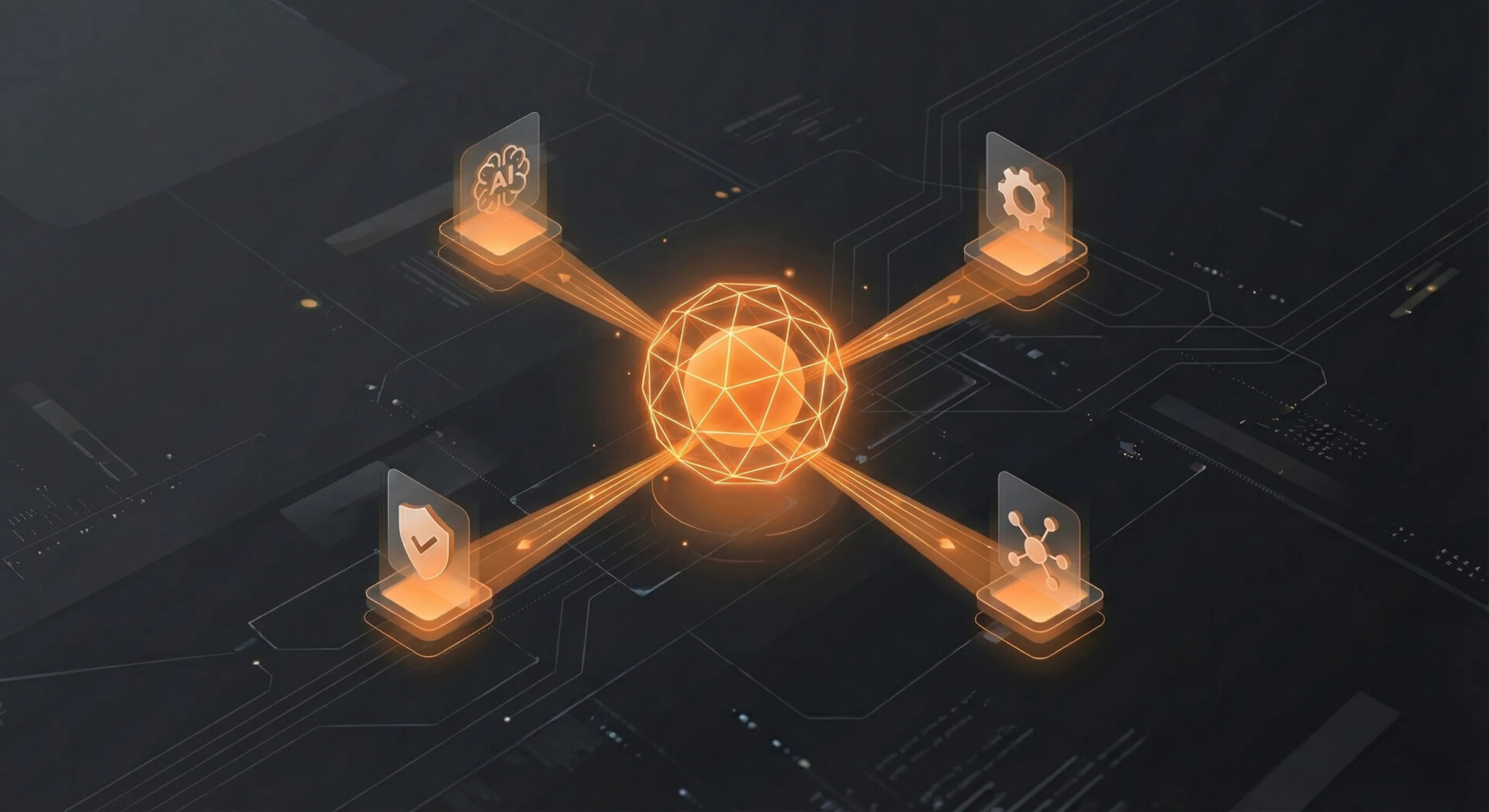
Agentic AI refers to autonomous systems that can perceive their environment, make decisions, and take actions to achieve specific goals. Unlike traditional chatbots that respond to prompts with pre-programmed answers, AI agents can:
- Reason through complex problems using multiple steps
- Access and use tools like databases, APIs, and external services
- Coordinate with other agents in multi-agent systems
- Learn from context to improve their performance over time
- Take autonomous action within defined guardrails
Think of the difference between a calculator and an assistant. A calculator gives you an answer when you ask a specific question. An assistant understands your broader goals, gathers information, weighs options, and takes action on your behalf.
The enterprise AI agents opportunity
For businesses, this represents a fundamental shift. Enterprise AI agents can handle workflows that previously required significant human coordination: processing documents, managing customer interactions, orchestrating data across systems, and making decisions based on complex criteria.
Gartner projects that 40% of enterprise applications will include AI agents by the end of 2026. The companies that figure out how to deploy these agents effectively will have a substantial competitive advantage. Those that don’t risk being left behind.
Why we’re making this shift
At HyperSense, we’ve built software solutions for businesses for years. We’ve worked across industries, solving complex problems, integrating systems, and helping organizations get more value from their technology investments.
Over the past two years, we’ve watched the AI landscape transform. We’ve paid close attention to what’s working and what isn’t.
Here’s what we’ve observed:
The technology has matured dramatically. Large language models, multi-agent orchestration, and standards like the Model Context Protocol (MCP) have made it possible to build AI agents that genuinely work. The infrastructure exists. The tools are ready.
But the implementation gap is widening. Companies are more confused than ever about how to move from experimentation to deployment. They’re drowning in vendor pitches, struggling with integration challenges, and losing confidence after failed pilots.
There’s a trust deficit. Too many organizations have been burned by AI initiatives that overpromised and underdelivered. They need partners who are honest about what’s possible and what isn’t.
We see an opportunity to help.
Not by selling dreams. Not by adding to the hype. But by focusing our expertise on what matters most: helping companies get AI agents into production where they can deliver real value.
This shift isn’t about abandoning our software development roots. It’s about applying everything we’ve learned about building reliable, scalable systems to the challenge of deploying AI that actually works.
Our approach to production-ready agentic AI solutions
“Production-ready” isn’t a marketing phrase for us. It’s a specific commitment to delivering agentic AI solutions that can be deployed, maintained, and trusted in real business environments.
Here’s what that means in practice:
Built for the real world
We design AI agents with production requirements in mind from day one. That means addressing security, reliability, monitoring, and integration as core requirements, not afterthoughts. Every agent we build is designed to operate within appropriate guardrails, with human oversight where it matters.
Focused on outcomes, not demos
A demo that impresses in a boardroom is meaningless if it can’t handle edge cases, scale under load, or integrate with your existing systems. We measure success by business outcomes: workflows automated, decisions improved, value delivered.
Small enough to be nimble, experienced enough to deliver
We’re not a massive consultancy that will staff your project with junior resources. We’re a focused team with deep experience building production software. You work directly with people who understand both the technology and the business context. We move fast, adapt quickly, and stay accountable.
Honest about what’s possible
We won’t pretend AI can solve everything. We’ll tell you when a use case isn’t ready, when the ROI doesn’t justify the investment, or when a simpler solution would work better. That honesty is how we build trust and how we help you avoid becoming another AI failure statistic.
What this means for you
Whether you’re a current client, a potential partner, or simply someone navigating the complex AI landscape, here’s what you should take away:
The opportunity is real. Agentic AI has the potential to transform how businesses operate. The technology is ready. The question isn’t whether AI agents will become essential. It’s which companies will successfully deploy them first.
The path forward requires the right partner. Moving from pilot to production isn’t just a technical challenge. It requires experience building production systems, honesty about what’s achievable, and a commitment to delivering real outcomes rather than impressive demos.
We’re here to help. HyperSense is focusing our energy on being that partner. We’re not trying to be everything to everyone. We’re focusing on what we do best: building agentic AI solutions that work in the real world.
If your organization is stuck in pilot purgatory, frustrated by failed AI initiatives, or simply trying to figure out where to start, we’d welcome a conversation.
No sales pitch. No pressure. Just an honest discussion about your challenges and whether we might be able to help.
Let’s talk about your AI challenges →