Cookies and privacy

We use cookies that the site needs to work and, with your consent, cookies that help us understand how the site is used and measure our campaigns. You can change your choice at any time from “Cookie settings” in the page footer. Details in our Cookie Policy and Privacy Policy.

Skip to content

Product Discovery. From Idea to Validated Concept in 2-4 Weeks.

Our TechBoost Program validates your product idea in 2-4 weeks: market research, user research, concept validation, and high-fidelity design. For teams exploring AI, it includes an AI readiness assessment so you know which processes benefit from agents before you commit to building.

You get a strategic roadmap, an interactive prototype, and development estimates. When an AI agent is the right answer, TechBoost feeds directly into the AI Feature Sprint: 4 weeks from validated concept to a deployed agent tied to your KPIs.

Discovery backed by teams who've already shipped AI agents to production. The same teams that shipped Signal Iduna's platform (300,000+ policyholders), Tinka's fintech app (50,000+ users in 3 months), and Reperks' AI agent (6-week MVP) run these engagements. 4.9/5 on Clutch across 31 reviews. You retain full IP ownership of everything we produce.
TechBoost your business

How the TechBoost Program works

Introduction call. Your business, project stage, technology constraints, initial scope. If AI is on the table: data sources, current workflows, automation candidates.

Deep context. Solution architects, product owners, designers, and developers dig into your objectives, challenges, audience, and competitive landscape. AI projects get a readiness assessment here.

Research and concept. User personas, high-level features, initial concept for the primary user journey. AI agents get prototyped and tested with stakeholders.

Refinement. Stakeholder review, high-fidelity concept, persona validation, feature set review. The result: a concept with everyone's feedback integrated.

Approach and estimate. Epics, user stories, UX estimation, development forecast. Validated AI use cases produce a ready-to-execute brief for the AI Feature Sprint.

How the TechBoost Program works

What the TechBoost Program covers

  • 01

    Market research and competitive gaps

    Where does your product fit? We map competitors, find the gaps, and identify positioning opportunities. For AI products, we track which competitors use AI and where they fall short.

  • 02

    User research and persona development

    Interviews and surveys uncover what your users actually need and struggle with. User personas ground every feature decision in real data. For AI products, we research trust barriers, technical comfort, and expectations around automation.

  • 03

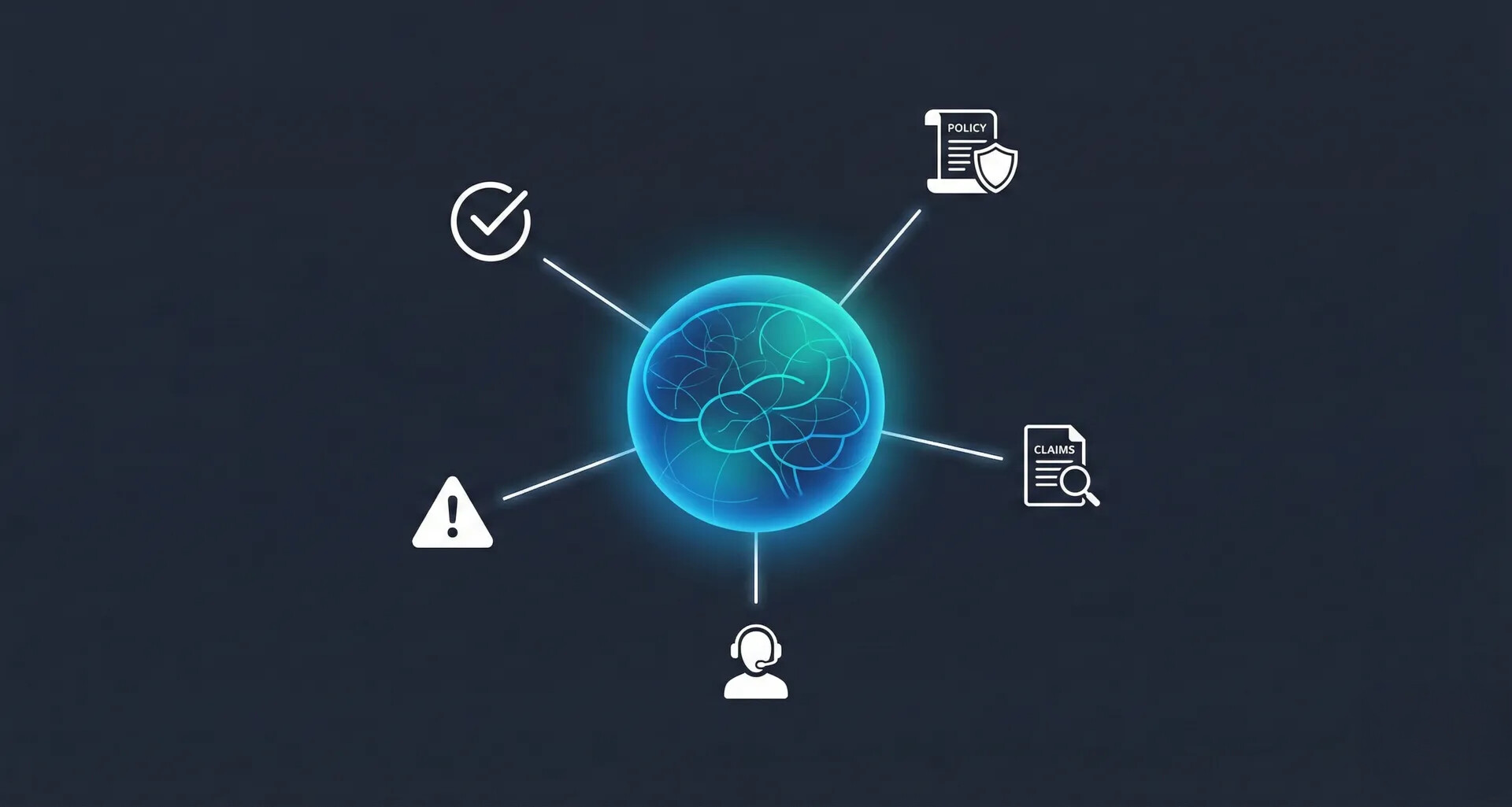
    AI readiness assessment

    Is your data clean enough for AI? Which processes are candidates for agents? We evaluate data sources, system architecture, and operational workflows. Not every problem needs an AI agent. Discovery is where you find out.

  • 04

    AI use case identification

    Your business processes mapped against proven AI agent patterns: document processing, knowledge retrieval, sales automation, customer support, compliance checks, and decision support. Each use case scored on feasibility, impact, and data readiness. The output: a prioritized list with estimated ROI.

  • 05

    Concept validation and prototyping

    Early prototypes and usability tests give real feedback before engineering starts. For AI features, we prototype the agent interaction so stakeholders experience AI behavior firsthand. This catches bad assumptions when they’re cheap to fix.

  • 06

    Risk assessment

    Technical feasibility and risks identified before they become expensive. For AI projects: model reliability, data quality gaps, compliance requirements, cost projections. Mitigation plans included.

  • 07

    Business analysis

    Revenue models, feature prioritization, and scope definition. A development roadmap aligned with your business goals.

  • 08

    Stakeholder alignment

    Key stakeholders aligned on vision, expectations, and requirements before development begins.

Ready to validate your product idea?

Tell us your concept, your market, and your timeline. If AI is on your roadmap, we’ll assess readiness and identify the highest-impact use case. If it isn’t, we’ll tell you.

Validate your AI use case in 4 weeks

Our TechBoost process

Our TechBoost Program validates your product idea in 2-4 weeks. We’ve refined our process over 20 years to deliver research, prototypes, and roadmaps that accelerate your path from concept to production.
  1. 01

    Introduction call

    Duration
    30 minutes
    Attendees
    Executive Management
    Objective
    Initiate engagement, introduce HyperSense’s core values and methodologies, and gather initial insights into your business landscape.
    Outcome
    Establish a mutual understanding of the process and outline the next steps.
    Focus Areas
    Business overview, evaluation of project stage, assessment of technology constraints, and initial scope definition.
  2. 02Phase 1

    Initial understanding and context setting

    Duration
    2-4 hours
    Attendees
    Executive Management, Solution Architect, Product Owner, Design, Development Teams
    Objective
    Develop a deep understanding of your business objectives and challenges.
    Outcome
    Establish a well-defined context and a clear starting point for further exploration.
    Focus Areas
    Team introductions, detailed business context, identification of software challenges, target audience analysis, and competitor review.
  3. 03Phase 2

    Research and concept development

    Objective
    Conduct thorough research and develop key personas, focusing on high-level features and initial conceptualization.
    Outcome
    A detailed concept for the primary user journey, overview of high-level features, and clear identification of target user groups.
  4. 04Phase 3

    Concept and research refinement

    Duration
    1.5 - 2 hours
    Attendees
    Executive Management, Solution Architect, Product Owner, Design Team
    Objective
    Validate the initial concept with stakeholders, refine ideas, and adjust features based on feedback.
    Outcome
    A consensus on a refined concept that integrates stakeholder feedback.
    Focus Areas
    High-fidelity concept review, presentation of personas, validation of feature sets, interactive Q&A, and collaborative ideation.
  5. 05Phase 4

    High-level solution and initial estimate

    Duration
    1 hour
    Attendees
    Executive Management
    Objective
    Provide an initial estimate and present a comprehensive solution that integrates all feedback.
    Outcome
    An overview of high-level features, the definition of Epics and User Stories for key scenarios, and a finalized high-fidelity concept.
    Focus Areas
    Detailed UX estimation, preliminary development forecast, and presentation of the refined strategic solution.

Case studies

Challenge

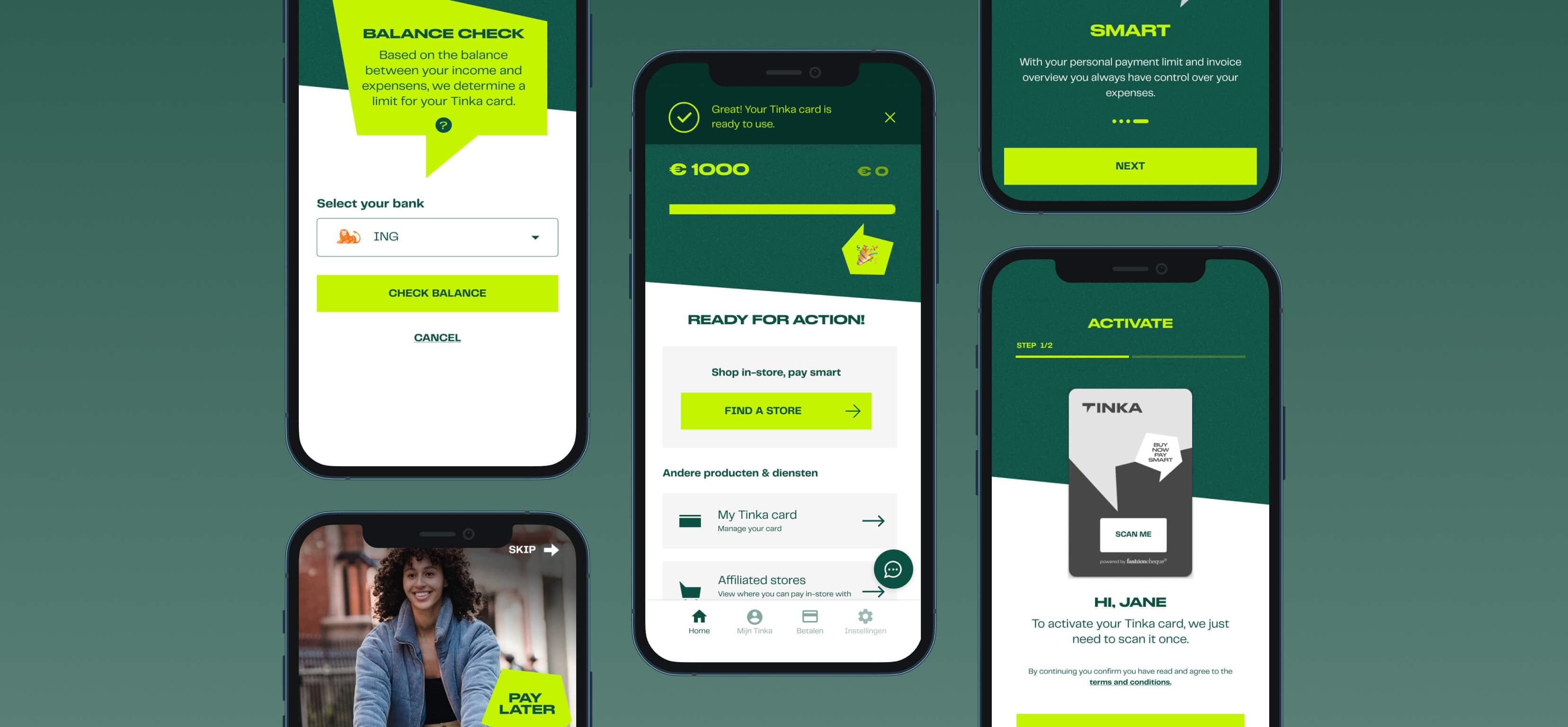
Working hand-in-hand with Tinka, HyperSense employed industry-leading mobile app development strategies to construct a versatile, user-centric app. Our focus was on creating a seamless interface for flexible payment options and elevated financial experiences.

Solution

Partnering closely with Tinka, we developed a versatile, user-centric mobile app focusing on a seamless interface that included flexible payment options for an improved financial experience.

Outcome

The app quickly became a pillar of Tinka's digital strategy, with over 1,000 daily active users and over 50,000 monthly active users. High ratings on app stores (4.8 on the App Store, 5.0 on Google Play) led to significant increases in revenue, user retention, market presence, and brand recognition.

tinka mobile app

Challenge

Trusted Carrier needed a comprehensive mobile and web ecosystem to meet the needs of various stakeholders and comply with stringent industry standards.

Solution

Using Agile-Scrum methodologies, our team built a scalable, secure platform incorporating Node.js, Loopback, MySQL, AWS, Angular, and Flutter. The solution included advanced features like kiosk modes and seamless ERP integrations.

Outcome

The app improved operational efficiency across the board and introduced new features that exceeded industry standards, laying the groundwork for future scalability and product development.

CTC mobile app

Challenge

KORE required precise location tracking for critical applications, from medical transports to school buses, with minimal battery drain.

Solution

We harnessed our R&D capabilities to develop an energy-efficient mobile location-tracking system that offers real-time data with customizable features, such as variable work schedules and multi-language support.

Outcome

The LBS EdgeSuite app enhanced operational efficiencies and safety, featuring a critical panic mode while consuming less than 1% of battery per hour during background operation. This success has reinforced our partnership with KORE and established our leadership in R&D for mobile technologies.

KORE mobile app

What you get

  • 01

    Strategic roadmap

    Prioritized features, timelines, AI use cases ranked by feasibility and impact. Clear direction for what to build first.
  • 02

    AI readiness report

    Data quality, infrastructure evaluation, and a prioritized list of AI agent opportunities. You’ll know which processes are ready for AI today and which need preparation.
  • High-fidelity design concept

    Your product visualized in detail. For AI features: conversational flows, confidence displays, human review interfaces.
  • Interactive prototype

    Clickable and testable with real users. AI interactions simulated so stakeholders experience the behavior before engineering starts.
  • Validated feature set

    Refined with your stakeholders. No bloat. Every element has a reason.
  • Development estimates

    Timelines and cost estimates. AI projects include a ready-to-execute brief for the AI Feature Sprint.
  • Integration and monetization strategy

    How the product interfaces with your existing systems. Revenue models for financial sustainability.
  • Ready to validate your product idea?

    Validate your AI use case in 4 weeks

  • Discovery backed by AI delivery experience

    We don’t just assess AI readiness in theory. We’ve shipped production AI agents: Reperks’ document processing agent, ZURI’s conversational sales concierge, Vera for insurance operations, DocuFlow for document processing. When we say "this use case is feasible," we’ve already built something like it.
  • A process refined over 20+ years

    We’ve run product discovery since 2003 across insurance, logistics, fintech, proptech, and e-commerce. The process works because the same teams that discover also build. When discovery identifies an AI agent opportunity, the team that validated it is the team that ships it.
  • ISO-certified quality and security

    ISO 27001 | ISO 9001 | GDPR Compliant | EU AI Act Ready | AWS Partner. HyperCare post-launch support means your product keeps evolving after discovery ends.
  • Cross-functional expertise

    MBAs, CPAs, and MDs alongside designers and engineers. Discovery informed by business context, not just technical feasibility.
  • US and European offices

    Chicago headquarters. Bucharest teams. Time zone alignment and local presence for North American clients.

Need speed? The AI Feature Sprint ships one deployed agent in 4 weeks.

By continuing, you accept the privacy policy. This site is protected by reCAPTCHA. Google's Privacy Policy and Terms of Service apply.

  • How long does the TechBoost Program take?

    2-4 weeks depending on project scope and complexity. When an AI agent is the validated outcome, you can move directly into the AI Feature Sprint for a deployed agent in 4 more weeks.

  • What does it cost?

    Cost is based on project scope and resources. We provide a clear estimate before starting. Eligible projects can access AWS co-funding to reduce your investment.

  • When is product discovery most valuable?

    When developing new products, planning significant upgrades, or navigating complex markets with many unknowns. It’s especially valuable when you’re considering AI but aren’t sure which processes benefit most, whether your data is ready, or how users will respond to AI-assisted workflows. Discovery answers those questions before you commit development budget.

  • What’s the difference between TechBoost and the AI Feature Sprint?

    TechBoost is discovery: research, validation, prototyping, and roadmapping. The AI Feature Sprint is delivery: a production AI agent deployed in 4 weeks. TechBoost identifies the right use case. The AI Feature Sprint builds it. Many teams do TechBoost first to validate, then move into the Sprint with a clear brief and high confidence.

Start a project ›

Ready to validate your product idea?

Tell us your concept, your market, and your timeline. If AI is on your roadmap, we’ll assess readiness and identify the highest-impact use case. If it isn’t, we’ll tell you.

  • Founded 2003, Chicago and Bucharest
  • 40+ engineers and specialists
  • 4.9/5 on Clutch, 31 verified reviews
  • You own all code, models and data
  • ISO 27001 and ISO 9001 certified
  • 10+ years, our longest client partnership

Tell Us About Your Project

Describe what you're building, your timeline, your KPIs, and any technical constraints. We'll review your project and get back to you with a clear next step.

Let's talk about your project

Get news about the latest software development trends and insights.

This site is protected by reCAPTCHA. Google's Privacy Policy and Terms of Service apply.